Searching for free OnlyFans pages is easy, but paying for several of them without losing control of your money is harder than most people expect.

Free pages set their subscription price to $0 and earn through pay-per-view messages and tips instead.
This article explains how to run one budget across every free follow, how to divide it, and how to review it before the month ends. The aim is a simple system you can keep using even when the number of pages you follow grows.
It also helps to know the wider paid picture, since free follows often sit alongside one or two paid subscriptions. Paid pages usually fall between $4.99 and $15, averages land around $5 to $10, and the maximum sits at $49.99.
Why per-page budgets fail
A five dollar limit on one page sounds easy to respect. Repeat that across nine or ten pages and the same five dollars becomes fifty, with no single decision feeling large enough to stop.
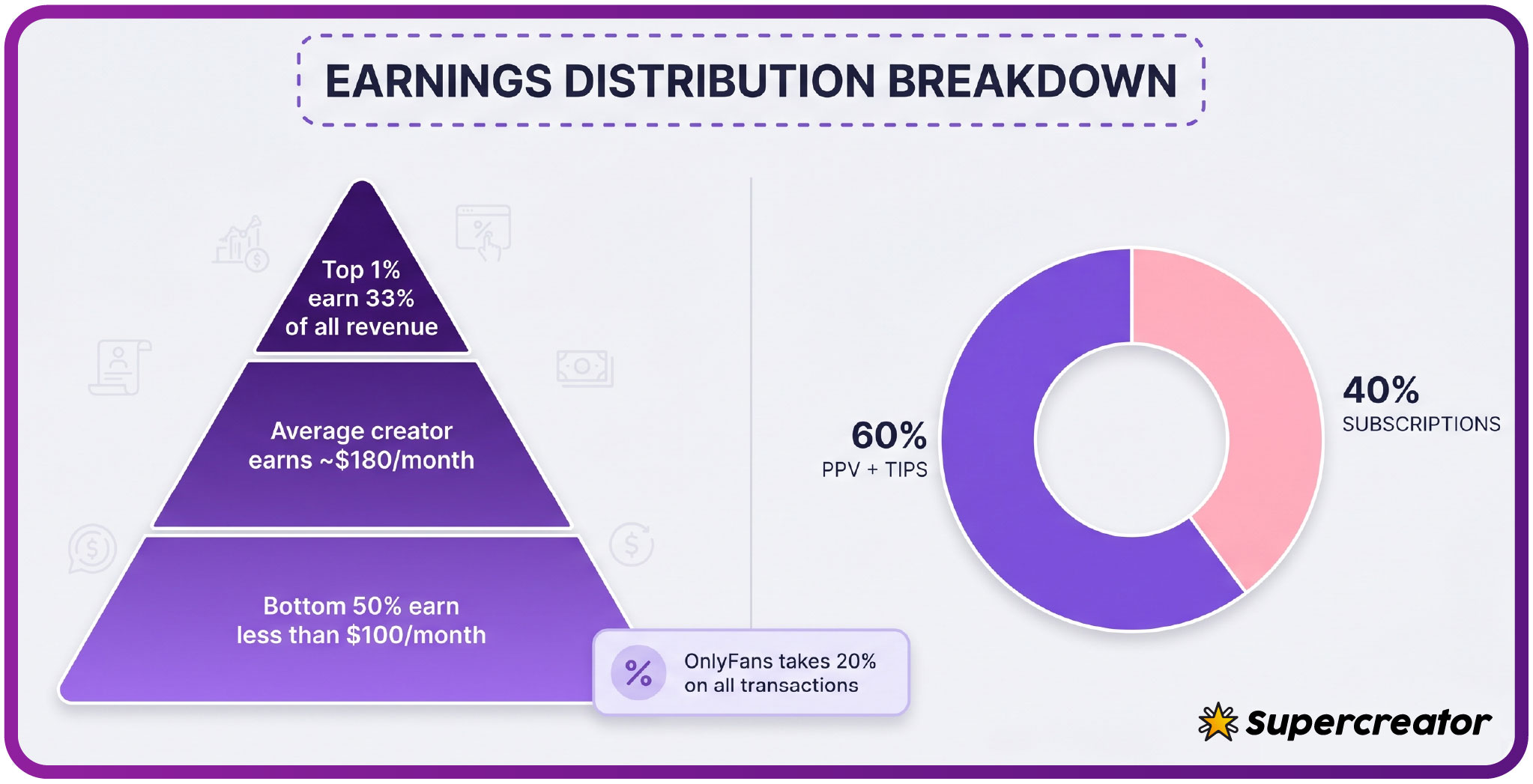
The platform takes a 20% fee on everything, including subscriptions, tips and pay-per-view, while the creator keeps 80%. That split does not change your spending, but it does explain why creators send frequent unlock offers.
There is also no built-in discovery feed or directory on the platform. Ranking sites exist because browsing is limited, which means users often follow more pages than they planned simply to keep options open.
- You cannot remember the last time you checked a total.
- Unlock messages arrive from pages you had almost forgotten.
- Your bank statement shows many small payments instead of one clear figure.
- You avoid adding up the month because you suspect the answer.
- You have started calling small charges unimportant.
Any two of those signs usually mean the per-page approach has already stopped working. The fix is not more discipline on each page.

One cap for all follows
Set a single monthly figure that covers tips and unlocks everywhere. Pick an amount you could lose without changing any other plan, then treat it as closed once it is spent.
This works because a cap is visible. Ten small limits are invisible, but one figure can be compared against a running total in seconds. A site such as BestOnlyFans can help you find pages worth following, yet the cap is what keeps those follows affordable.
| Signal | Good example | Poor example |
| Number of limits | One monthly cap | Ten separate page limits |
| Running total | Checked twice a week | Checked when worried |
| Unlock decision | Fits the remaining cap | Fits this page only |
| End of month | Total known in advance | Total discovered on the statement |
| Overrun response | Pause unlocks everywhere | Blame one page |
Write the cap down somewhere you will see it, not in a browser tab you close. Many people use a note on the phone lock screen or a single line at the top of a notes app, because both survive a cleared session.

Splitting the cap by page
A shared cap does not mean every page gets an equal share. It means each page has a rough share so that one heavy follow cannot quietly consume the month.
The table below shows how a fixed total of $40 can be divided across five free follows, leaving part of it unassigned. The unassigned amount matters, because it becomes the buffer for a heavier week later.
| Page | Share | Spent so far | Still available |
| Page one | $10 | $6 | $4 |
| Page two | $8 | $8 | $0 |
| Page three | $8 | $3 | $5 |
| Page four | $7 | $2 | $5 |
| Page five | $4 | $1 | $3 |
| Unassigned | $3 | $0 | $3 |
Shares are estimates, not contracts. If page four has nothing worth unlocking this month, move part of its share to whichever page is producing more of what you actually want.
Keep the total fixed even when the split changes. That rule alone prevents the slow drift that turns a $40 month into a $90 one.

Tracking without spreadsheets
Most people abandon budgets because the tracking tool demands more effort than the spending did. Skip the spreadsheet and use whatever you already open every day.
- Add each unlock to a single note, one line per charge, with the date and amount.
- Review the payment section of your statement once a week and match it against the note.
- Keep the running total at the top of the note so it is the first thing you read.
- Round each charge up to the nearest dollar to build a small hidden reserve.
- Delete lines only after the statement confirms them.
A notes app is enough for this job, and a statement review catches anything the note missed. Together they take only a few minutes and need no formulas.
If you cannot tell whether an account is free or paid, the help centre explains the difference and how the price appears on a profile. Free pages show a price of $0, while paid pages show a monthly figure that renews until cancelled. For a starting point, can onlyfans accounts be free collects free pages.
When a creator raises the subscription price, auto-renew stops and existing access lasts until the current paid period ends. That rule affects paid follows, and it is worth knowing before a renewal surprises you.
Practical tip: note the date you add a new free follow, then check that page once a week. Pages that send the most unlock messages in their first month often keep sending them, and that early pattern is the best warning your cap is about to be tested.

A weekly ten-minute review
A short routine each week keeps the cap accurate long before the month ends. Ten minutes is enough when the note and the statement already exist.
- Open the note and read the running total first.
- Compare that total against each page share in the split table.
- Check the statement for charges the note does not include.
- Add any missing amounts and correct the running total.
- Decide which pages still have room and which are paused.
- Move any unassigned amount to the page with the best value that week.
Do the review on the same day each week so it becomes a habit rather than a reaction. Waiting until the statement arrives removes the chance to adjust anything.
If the running total is already past the cap, stop all unlocks until the next month starts. The pages remain followed and nothing is lost except a few weeks of access you were not paying for anyway.

When a page pushes past its share
One page will always try to take more than its share, usually through frequent messages. Pause unlocks there and leave every other follow untouched.
Pausing means ignoring pay-per-view offers on that page until the next month begins. It does not mean unfollowing, so your place in the follower list stays the same and no history is lost.
- Week one: expect the highest number of offers, often several per day.
- Week two: offers continue but usually settle into a pattern.
- Week three: a heavier push often appears near the end of the month.
- Week four: lower-value offers become more common.
- Any week: a single message can ask for more than one page share.
When a page repeatedly breaks its share, reduce that share in the next split instead of raising the overall cap. The cap is the part that protects your budget, and the split is the part that should move.
It is also fair to stop following a page that no longer fits your budget at all. Removing one follow changes the split for every remaining page, which is usually easier than trying to spend less everywhere at once.
Anyone wondering how free access is sustained can read more about why creators choose it and how they earn.
Free access earns through tips and pay-per-view rather than a monthly charge, and that model encourages frequent small requests. Recognizing the pattern makes it far easier to hold a limit. Some users find it helpful to check can onlyfans accounts be free so they understand what the $0 price really means before they start following more pages.
Rolling unused budget forward
Leftover amounts should not disappear at the end of the month. Roll them into one reserve and use that reserve when a heavier week arrives.
Rolling forward rewards restraint without punishing it. A quiet month builds a small cushion, and the cushion covers a page that suddenly offers something worth the money.
- Avoid rolling the same leftover amount twice in a row.
- Avoid topping up the reserve from a different budget line.
- Avoid treating the reserve as a new monthly cap.
- Avoid spending the reserve before the weekly review confirms it.
- Avoid keeping the reserve hidden from your running total.
A platform such as BestOnlyFans can shorten the search for pages worth your time, but the reserve is what keeps a heavier week from breaking the plan. The reserve exists to be spent, just not twice.
Review the reserve at the same time as the weekly total, and note how much of it has been used. Anything left at the end of a full quarter can lower the main cap for the next one.
A single cap also makes the platform’s 20% fee easier to ignore, because you are tracking what leaves your account rather than what arrives in someone else’s. The published price ranges stay useful for paid follows, but for free pages the only number that matters is your own cap.
Sites like BestOnlyFans exist partly because there is no built-in directory, so the number of free pages you can find keeps growing. The cap is what lets you follow more of them without spending more than you planned.
FAQ
Can a free page start charging later?
A page set to a $0 price can change its subscription price, but auto-renew stops and existing access lasts until the current paid period ends.
Is there a subscription below $4.99?
No. The minimum base price is $4.99, and only a promotional first month may dip below that figure.
How much does the platform take?
The platform fee is 20% on subscriptions, tips and pay-per-view, and the creator keeps the remaining 80%.
Why use one cap instead of several?
One figure is visible and easy to check. Several small limits hide the total until the statement arrives, which is exactly when adjustments are no longer possible.